Unblocked Puzzle Games
10 HTML5 titles that load in typical school and office browsers.
Puzzle games occupy a strange position in classroom policy: technically 'games' but often tolerated because they build logic and problem-solving skills. When a Chromebook is locked down and only basic browser functions are available, engaging with puzzles can offer a mental reset without distracting from study goals. These games challenge pattern recognition and critical thinking, making them a subtle yet valuable addition to school and office breaks.
Why HTML5 browser games load when others don't
Puzzle games typically rely on minimal asset loading and pure client-side logic, which means they use very little network bandwidth and do not require complex server interactions. This lightweight design allows them to run smoothly over HTTPS connections without triggering content filters that often block heavier multimedia or streaming content.
A note on Acceptable Use Policies
Respecting local Acceptable Use Policies is essential, especially with puzzle games that might be seen as both recreational and educational. Schools and workplaces often allow puzzle games because they promote cognitive skills, but it is important to use them responsibly and within the guidelines set by administrators.
Short-break vs. deep-play picks
Sliding Puzzle, Onet Puzzle and Ball Sort rounds finish inside a few minutes each, making them the short-break picks. Logic Vault rotates several puzzle types and rewards a longer sit, while QBlock and Draw Save Puzzles scale with however much patience the timetable left you. Chess Free is the deep-play choice — a full game against the engine comfortably fills a lunch break.
Our 10 picks
The classic fifteen-style tile grid returns with three sizes — 3x3, 4x4, and 5x5 — so session length scales with the time available. A compact 3x3 board resolves within a short break, while bigger grids reward planning around the empty space. The publisher notes smooth play on both desktops and mobile devices.
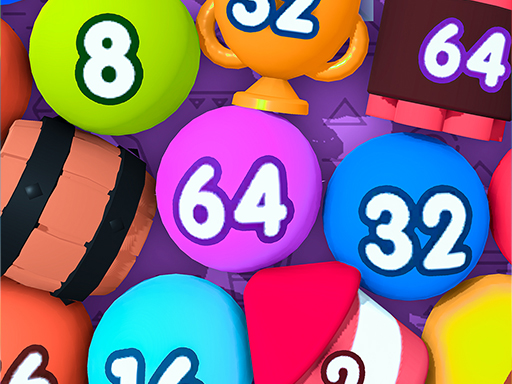
Bubble Merge 2048 combines number merging with spatial reasoning, encouraging quick mental calculations and strategic planning suitable for brief downtime.
Seven rotating puzzle formats — from numeric sequences to quick arithmetic and odd-one-out — keep this brain trainer close to classroom skills while staying genuinely game-like. Each level is a single self-contained question answered by selection, so progress happens one short decision at a time, a rhythm that suits five stolen minutes between tasks.
Reordering colored balls until every tube holds a single hue is a quiet, self-paced task with drag-and-drop as the only control. Foresight matters more than speed here, so a puzzle can sit mid-solve during class and resume exactly where it stopped. Difficulty grows as colors and tubes multiply.
Classic drag-and-drop block placement with a detail many rivals skip: pieces can be rotated before committing. The stated absence of time pressure makes it a genuinely interruption-proof desk game — clear a line, answer a question, come back. Keeping open space on the board is the whole long-term skill.
Chess Free promotes strategic thinking and foresight, making it a deep puzzle experience for those seeking a longer mental engagement during free periods.
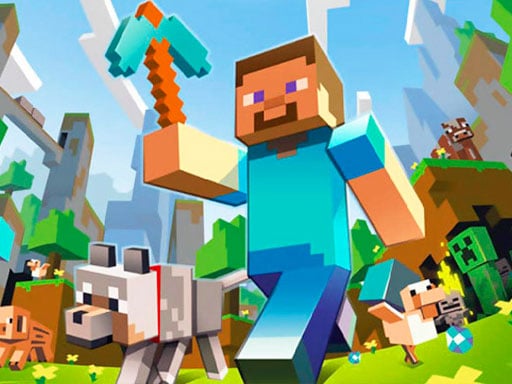
Block World puzzles require spatial visualization and planning, skills that support STEM learning and are well-suited for classroom-approved gameplay.
Draw Save Puzzles invites creativity alongside problem-solving, encouraging users to think outside the box while respecting school usage policies.
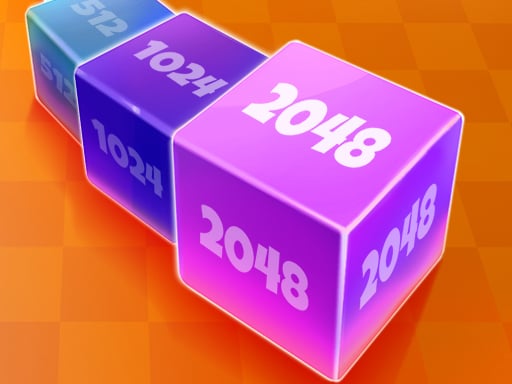
Cube Arena 2048 merges number puzzles with 3D spatial challenges, combining cognitive skills that align with educational goals during breaks.
Pairs of identical tiles come off the board only when a path of three lines or fewer connects them, which turns simple matching into route planning. Individual boards clear quickly, hint and shuffle boosters cover stuck moments, and a library of thousands of levels means the next short break always has a fresh board.






FAQ
Are puzzle games actually useful for learning?
Yes, puzzle games enhance critical thinking, problem-solving, and pattern recognition, all of which support cognitive development and can complement academic learning.
Do schools usually distinguish puzzle games from action games in AUPs?
Many schools do differentiate puzzle games from action games, often permitting puzzles because they are seen as educational tools rather than purely recreational distractions.
Can puzzle games be used to support math skills in the classroom?
Absolutely. Games like RiddleMath and 2048 variants reinforce arithmetic and logical reasoning, making them useful supplements for math practice.
Why do puzzle games rarely require heavy network resources?
Puzzle games often run primarily on client-side logic with minimal graphics and no streaming, which reduces network load and helps them bypass restrictive filters.
More to explore
Browse the full Puzzle category, the unblocked games guide, or the complete catalogue.