Unblocked Two Player Games
12 HTML5 titles that load in typical school and office browsers.
One Chromebook between two people is the real two-player setup at school: a shared desk, a short break, and a single keyboard. The games below are chosen for exactly that situation — arrow keys against WASD on one machine, a single button per player, turn-based play where the mouse simply changes hands, or passing the keyboard between attempts. No second device, account, or download enters the picture, and formats stay short on purpose: first-to-five baskets, single duels, quick minigame rotations, so the rematch ends before the bell does.
Why HTML5 browser games load when others don't
Local two-player games are technically simpler than online multiplayer. Both inputs come from one keyboard, so there are no matchmaking servers, websocket sessions, voice or text chat, and no login wall — precisely the components content filters flag most often. The entire match runs inside a single browser tab over ordinary HTTPS, which is why these titles tend to load where networked games fail.
A note on Acceptable Use Policies
Sharing a keyboard does not change the rules. Two-player sessions still fall under the school or office Acceptable Use Policy, so keep matches to breaks, keep the volume considerate, and treat a blocked site as an answer rather than a challenge. This page describes compliant games, not workarounds.
Short-break vs. deep-play picks
The one-button picks decide a winner fastest: 12 MiniBattles rotates through its minigames at a brisk pace, and Basket Random ends at five points. Stickman duels and Ragdoll Soccer occupy the middle ground — single matches are quick, but the loser reliably demands another. Chess Free and Castel Wars repay a full lunch break, since time controls, wall building, and upgrades need room to matter, while Stickman Party Parkour moves only as fast as the slower pair cooperates.
Our 12 picks
When a piece is selected, the board lights up every legal move, which keeps a lunchtime game moving even between mismatched players. Local play supports bullet, blitz, and rapid time controls, an undo covers misclicks, and eighteen difficulty levels mean the loser can practice against the engine afterward.
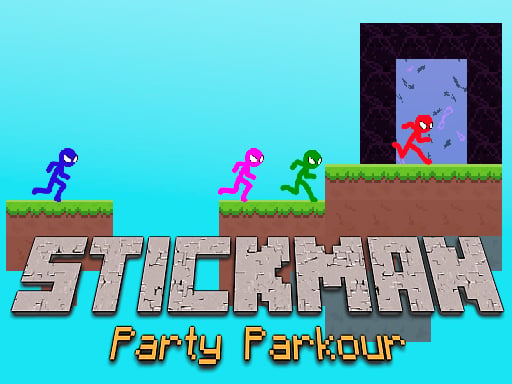
Coordination, not speed, is what this parkour set actually grades: players move in two pairs, and no one advances until all four reach the door. Cliff falls and lethal obstacles punish anyone who rushes ahead of a partner, so the winning habit is spacing and patience — useful chaos for a shared screen.
Because weapons drop onto the field at intervals, each duel turns into a scramble for position rather than a static shootout. Moving tracks make reckless grabs risky, denying a gun can beat holding one, and the built-in two-player option makes it a natural head-to-head pick for one keyboard.
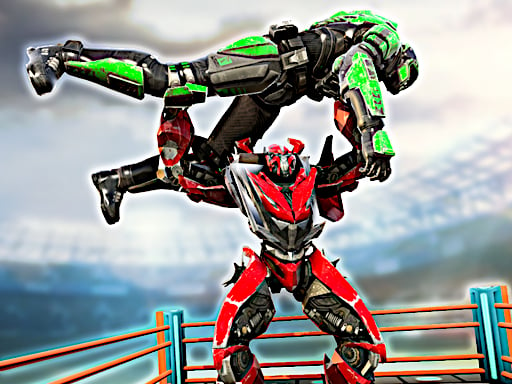
Robot against robot in a 3D arena, with matches against either the computer or a second player. Distance control and attack timing decide these duels — overcommitting gets countered — and a human opponent punishes repeated habits far more directly than the CPU, which is exactly what makes the two-player mode the draw.
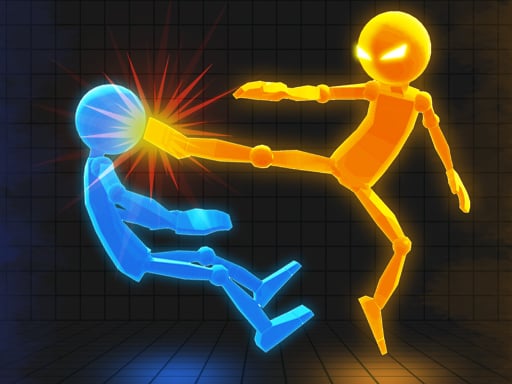
There is no long move list to memorize in this retro stick fighter, which is precisely why it works between two people sharing a machine. With a limited move set, matches become pattern reading — spotting predictable rushes and punishing overcommitment — and anticipation reliably beats raw button speed.
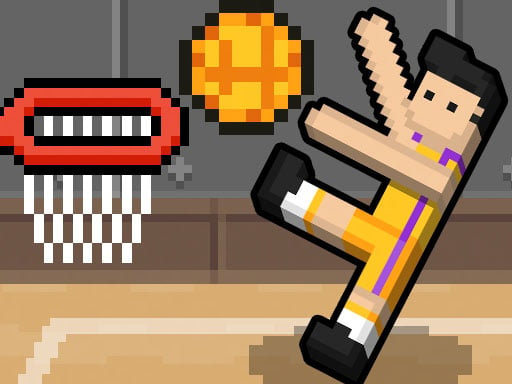
Both players need exactly one key each, which settles the how-do-we-share-a-keyboard question before it comes up. Points swap the court, ball, and player sprites at random, matches end at five, and the timing rhythm underneath the visual chaos is learnable — the player who finds it first usually wins.
Half the strategy is wall placement: bricks can shield a tower, trap an opponent, or accidentally funnel enemy catapult shots somewhere unhelpful. Between volleys, a balloon-riding hero drops bonuses on an unpredictable schedule, and thrown swords serve as a last-resort attack — a compact duel of building and timing for two.
On a shared screen, the floppy physics become the entertainment: both players wrestle the same unstable momentum, and goals often arrive half by plan, half by collapse. The two-player match mode is more reactive than the solo puzzle mode, and short scoring exchanges keep a break-time series moving.
Arrow keys versus WASD is the whole control scheme, stated plainly by the game itself, so two players fit on one keyboard without negotiation. Ragdoll physics make every clash loose and slightly unpredictable, which keeps rematches fresh — spacing and patience win more fights than fast mashing does.
Soccer shootouts, sniper duels, and ten more micro-games rotate at random, and every one of them runs on a single button per player. Rounds are brisk by design, so a best-of series fits any gap in the day, and the randomized rotation stops either player from leaning on one practiced skill.
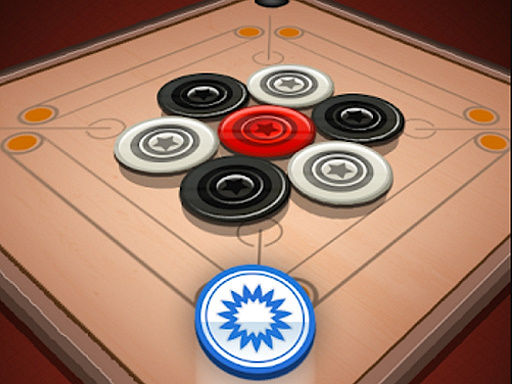
Only the mouse matters here: sliding the striker with controlled drags covers aiming and power both. Play passes turn by turn, so keyboard sharing never becomes an issue, and the deeper game lives in rebound shots off the board edges — anticipating how disks scatter after collisions separates regulars from first-timers.
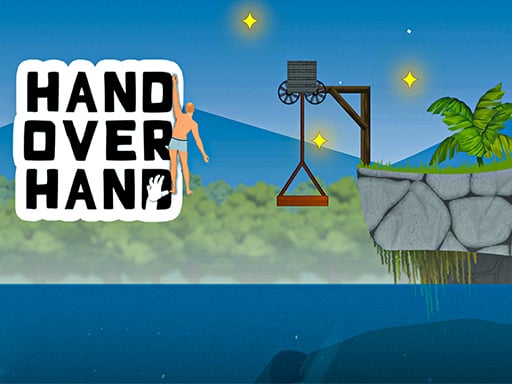
Grip by grip, this climbing race is about momentum management — reach too fast on slippery surfaces and the ragdoll body swings out of control. The stated goal is racing to the summit and grabbing the red flag, while collectible stars reward anyone willing to leave the safest line.


FAQ
Do two-player browser games need accounts or an online lobby?
No. These picks are built around local play: the action happens on one machine and one browser tab, with no logins, invites, or matchmaking involved. The absence of an external game-server connection is also part of why they load in filtered environments.
What if one player is much better than the other?
A few picks level the field structurally. Chess Free offers eighteen difficulty levels and an undo, so the weaker player can warm up against the engine first. Basket Random re-rolls the court, players, and ball every point, and the ragdoll physics in Ragdoll Soccer and Stickman Fighting 2 Player add enough chaos that experience only goes so far.
How do two people split one keyboard without hitting each other's hands?
The picks fall into three layouts: split-key games like Stickman Fighting 2 Player assign arrows to one player and WASD to the other; one-button games like Basket Random and 12 MiniBattles need a single key per player; and turn-based games like Chess Free and Carrom 2 Player involve no simultaneous input at all — the mouse just changes hands.
More to explore
Browse the full Two Player games, the unblocked games guide, or the complete catalogue.